Reviews Review | National Exams — finding hope for the future among Georgia’s youth
by Xandie (Alexandra) Kuenning
(Updated: about 2 hours ago)3.5/5★
Giorgi Mrevlishvili’s 2024 documentary provides a glimpse into a free-thinking Orthodox school in rural Georgia.
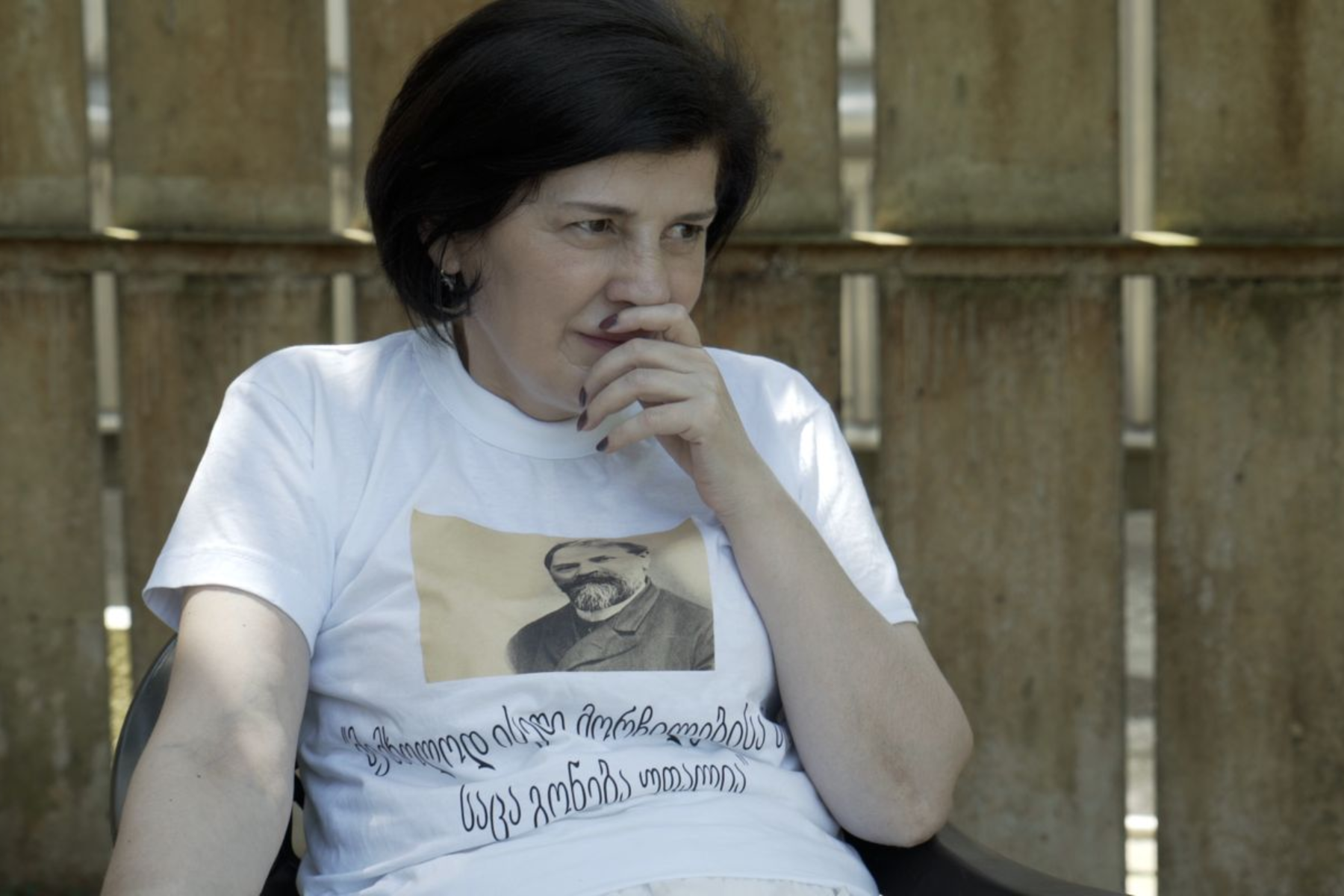
‘Sometimes I feel like nobody and that nobody needs me. I feel so out of place’, Nana Mgalobishvili says to a nun in the opening scene of National Exams. The rest of the film seeks to prove her wrong — as the nun responds, Nana’s work as a teacher is more important than ever.
Georgian director Giorgi Mrevlishvili’s film follows Nana, a Georgian language teacher at the Chokhatauri Parish School, over the course of a school year. The camera traces her moderation of class debates on the country’s most famous authors; after-school sessions to discuss her students’ own reading choices; and organising the school’s graduation ceremony.
Many of the discussions captured on camera highlight how classic literature can remain contemporary in practice — the same concepts of authoritarianism, oppression, and conformism are just as relevant amidst the increasingly undemocratic ruling Georgian Dream party today as they were during the 1921 Soviet invasion.
What makes these conversations especially fascinating is that they are occurring in a parish school, in a country where religion tends to skew towards conservatism. Yet here, the administration is proud of teaching critical thinking to their students, boasting about a Muslim student who wanted to transfer in after hearing about how free-thinking the school was.
At the same time, however, for a non-Georgian audience, the writers and thinkers being discussed will not be overly familiar. Many have barely any works translated into English, which is a shame given how interesting some of their works appear to both the students and Nana, who is ever passionate. As a result, the long scenes of Nana and her students analysing certain paragraphs or chapters could become a tad tedious for those unfamiliar with the text’s context.
While the majority of the film centres on the students, there is one other scene, bar the film’s opening, that helps viewers to really understand Nana as a person. During a Christmas party — featuring some of the most profligate decor I have ever seen — Nana recounts her experiences in the 9 April 1989 massacre.
That day, thousands of people gathered in support of independence only to be brutally suppressed by Soviet forces.
Nana recounts that as a result of being tear-gassed, her tongue dried so much it cracked, and that the symptoms have recurred every April ever since. A friend chimes in that it’s proof toxic chemicals were used, for ‘What else could have beaten a Gurian woman’s tongue’. For Nana, this was a turning point in her life, and is a large reason for why she teaches the way she does.
One of the through-lines of the film is how the Georgian writers and artists discussed have fought against oppression. In what appears to be this through-line coming full-circle, in October 2025, the film’s director Mrevlishvili was detained under administrative charges for ‘blocking the road’ during protests on Rustaveli Avenue in October 2025, and subsequently sentenced to seven days of imprisonment.
Film details: National Exams (2024), directed by Giorgi Mrevlishvili. The film will be screened with English subtitles in Tbilisi by OC Media on 24 November 2026.
Reviews
Film Reviews
9 April Massacre
Cinema
Culture
Georgia
In Focus
Education
Literature
Georgia’s EU U-turn
Xandie (Alexandra) Kuenning • Follow
272 articles•0 Followers
Culture and Features Editor. After years in academia, Xandie returned to Georgia to join OC Media. Her previous work with non-profits focused on Eurasian affairs, particularly queer and gender rights and green politics. She’s also a fan of foreign cinema, tea, and books (but not spilling tea on books).