Reviews Review | Limits — The beauty of everyday life and the weight of moral responsibility
by Diana Martirosyan
4.5/5★
Lana Gogoberidze’s 1968 film feels surprisingly contemporary, offering a quiet but persistent reflection on what it means to live alongside others.
Lana Gogoberidze, one of the most important filmmakers of Soviet Georgian cinema, offers a remarkably atmospheric portrait of late-1960s Tbilisi in Limits (1968). Nearly six decades later, the film remains fascinating not only for the moral questions it raises but also for its ability to capture the rhythms, relationships, and particular charm of an era.
The story follows a group of relatively young, middle aged , charming, and restless friends, whose lives revolve around creative ambitions, romantic entanglements, professional struggles, and everyday concerns. Among them is Givi (Geidar Palavandishvili), a theatre director who, together with his friends, accidentally witnesses a violent confrontation in a pedestrian underpass, ending with a young man being stabbed to death. Although life continues, the incident keeps returning to his thoughts. Could they have intervened? Could they have saved the man’s life? And where does personal responsibility begin when confronted with someone else’s tragedy?
Interestingly, Gogoberidze never allows this incident to completely dominate the narrative. Nor does she establish a single, clearly defined protagonist. Although Givi seems to occupy a central position, the film constantly shifts its attention from one character to another, allowing their individual stories, relationships, and uncertainties to unfold almost organically.
What makes Limits particularly captivating is its extraordinary sense of atmosphere: Watching it feels almost like stepping into Tbilisi in the late 1960s, observing its inhabitants as they go about their lives. There are family gatherings, unexpected visits, conversations about work and relationships, and seemingly insignificant domestic concerns. In the home of Sofiko Chiaureli’s character, also named Sofiko, we encounter a large family absorbed in the familiar chaos of everyday life. They worry about their children, go shopping for shoes, and try to help their friends. Sofiko, for instance, becomes involved in arranging a creative space ostensibly for a friend, although it remains unclear whether she is actually doing it for herself. There is a sense that the project is, above all, her own attempt to escape the monotony of domestic routines and responsibilities.
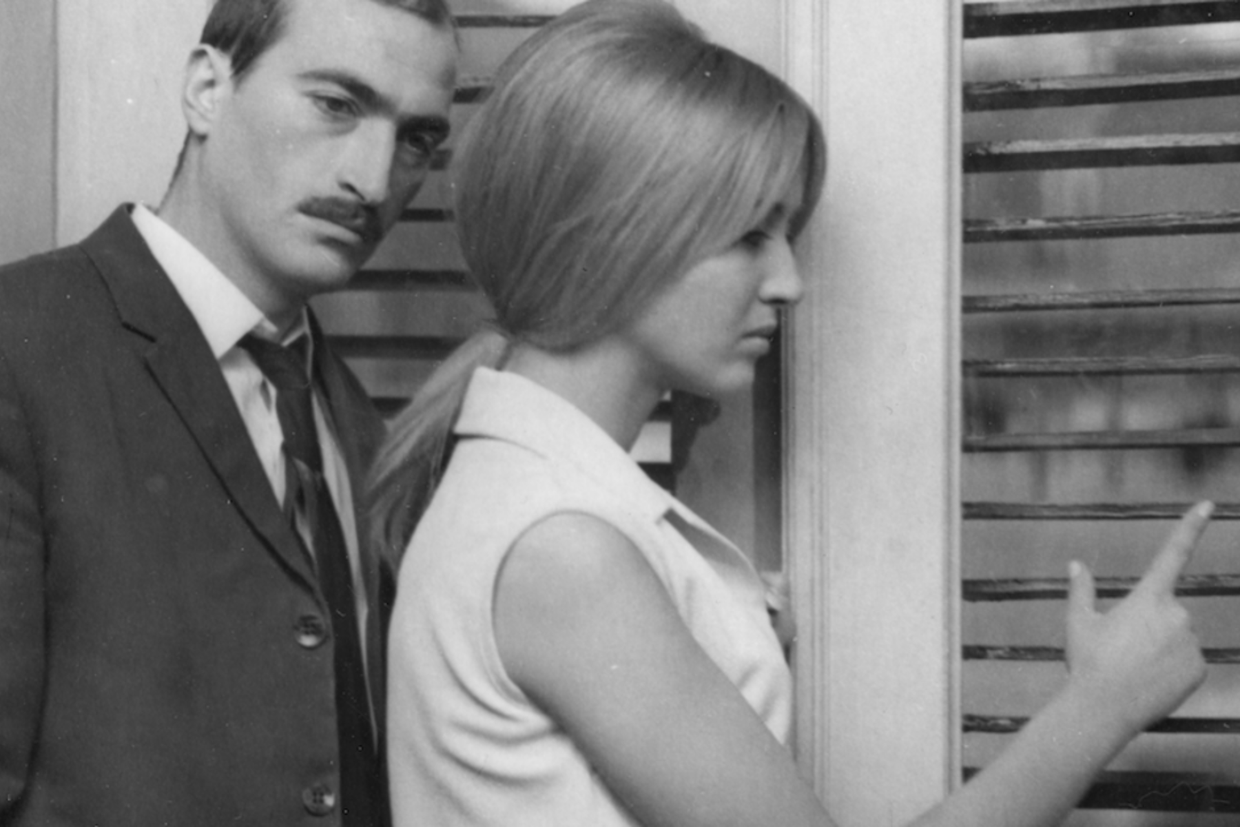
Apart from Sofiko, another central female figure is Eka (Rusudan Kiknadze), whose relationship with Givi remains rather ambiguous. The young woman herself seems to embody a certain freedom and restlessness of the time. Beautiful, sociable, and seemingly independent, she moves through Tbilisi attracting attention, encountering acquaintances, and meeting young men who approach her in the street. Her relationships and intentions remain somewhat obscure, as do those of many other characters. Gogoberidze leaves much unsaid, allowing us to interpret their desires, frustrations, and emotional uncertainties for ourselves.
There is something distinctly reminiscent of the French New Wave in this approach to storytelling. The spontaneity, the effortless transitions between characters, the fascination with local people and their relationships, and the apparent absence of conventional dramatic structure truly represent 1960s cinema. People wander through the streets, visit one another without invitations, fall in and out of love, discuss their work, and question their choices. Nothing particularly extraordinary seems to happen, and yet at the same time everything is. Life itself becomes the subject of the film.
Even the murder, despite its obvious significance, feels almost incidental within this larger portrait of everyday existence. It is simultaneously the moral centre of the narrative and one event among many. Givi continues to struggle with his artistic ambitions, wondering how to stage a play, how to approach the woman he likes, and how to make sense of his own decisions.
Other characters face their own dilemmas. During an archaeological excavation, Eka jokingly suggests marriage to her superior - Givi’s friend - a seemingly casual exchange that might also reveal a deeper longing for stability, companionship, or simply the possibility of settling down. Such moments are never fully explained. Their significance lies precisely in what remains between the lines.
This openness is perhaps one of the film’s greatest strengths. Gogoberidze does not impose clear answers or moral judgements. Instead, she observes people navigating their lives, sometimes carelessly, sometimes thoughtfully, often without understanding the consequences of their actions.
Nearly 60 years later, Limits feels both distant and surprisingly contemporary. Its particular social atmosphere, the ease of human interaction, and the carefree spirit of its characters belong to another time. Yet the questions it asks about love, responsibility, artistic fulfillment, and the choices we make remain entirely relevant. Beneath its irresistible slice-of-life charm lies a quiet but persistent reflection on what it means to live alongside others.
Film details: Limits (1968), directed by Lana Gogoberidze, screened at the sixth Kutaisi International Short Film Festival.
Reviews
Film Reviews
the Soviet Union
Georgia
Culture
Cinema
In Focus
Kutaisi International Short Film Festival
Diana Martirosyan • Follow
3 articles•0 Followers
Diana Martirosyan is an Armenian film critic, cultural journalist, and film programmer. She teaches contemporary cinema at the Yerevan State Theatre and Film Institute. Her work focuses on auteur cinema, with a particular interest in contemporary Eastern European filmmaking, emerging cinematic voices, and the cultural and political contexts shaping cinema in the region. She regularly attends international film festivals as a critic, programmer, and jury member.