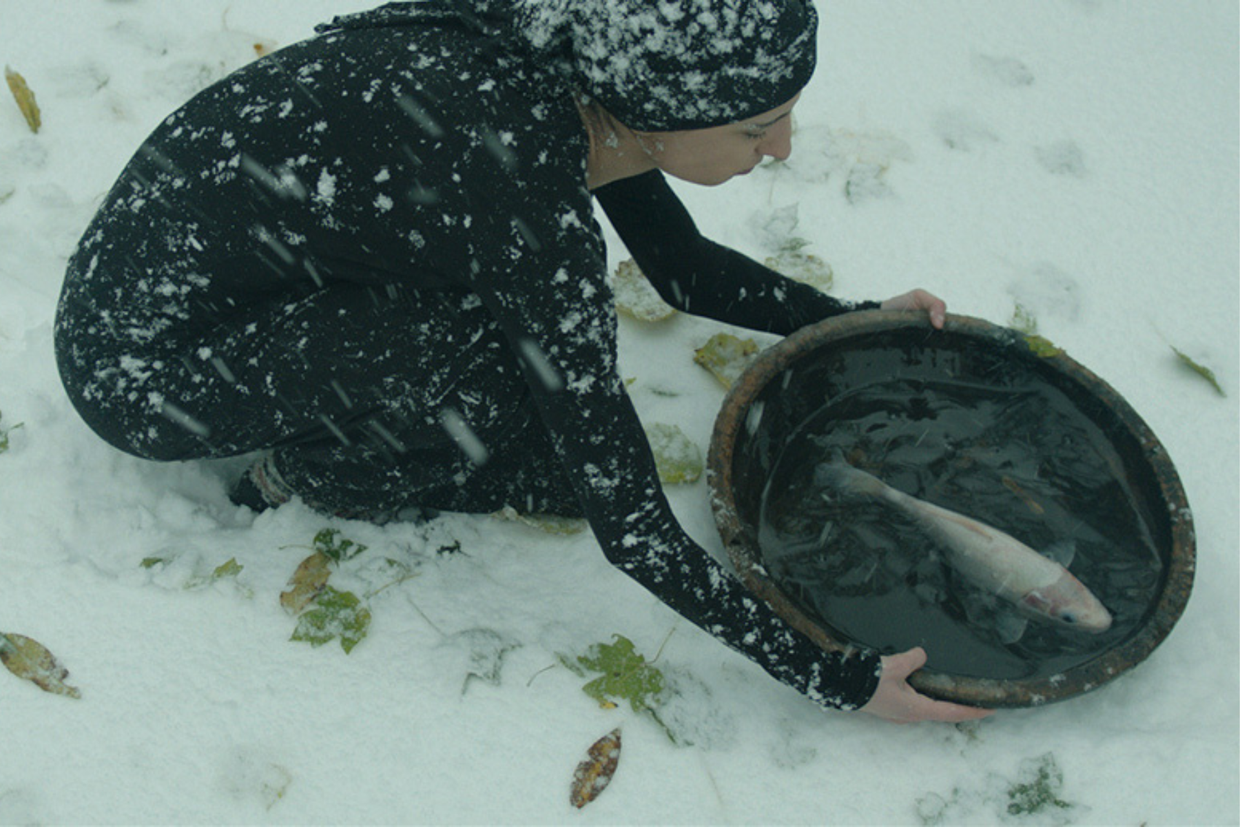
Namme is a poetic portrait of a young Georgian woman who inherits the sacred, and quietly grieves for the ordinary. The tale is as old as time: a father, patriarch and healer, keeper of ancient knowledge; three sons, finding their own paths in the world; and a daughter, the caretaker of both the father and sacred tradition — possessor of a power that is a gift and a burden at once, sacralised yet longing for ordinary life. This is the premise of Zaza Khalvashi’s 2017 feature Namme, but unlike many films built on similar fables, Khalvashi does not make the conflict between generations his main subject. There is no conflict here, no anger or violence — only an inward-gazing sadness and a quiet acceptance.
← Все новости
Culture
Review | Namme — Zaza Khalvashi’s Medea in the Snow
Читать полностью на сайте источника
OC Media
↗ ОТКРЫТЬ