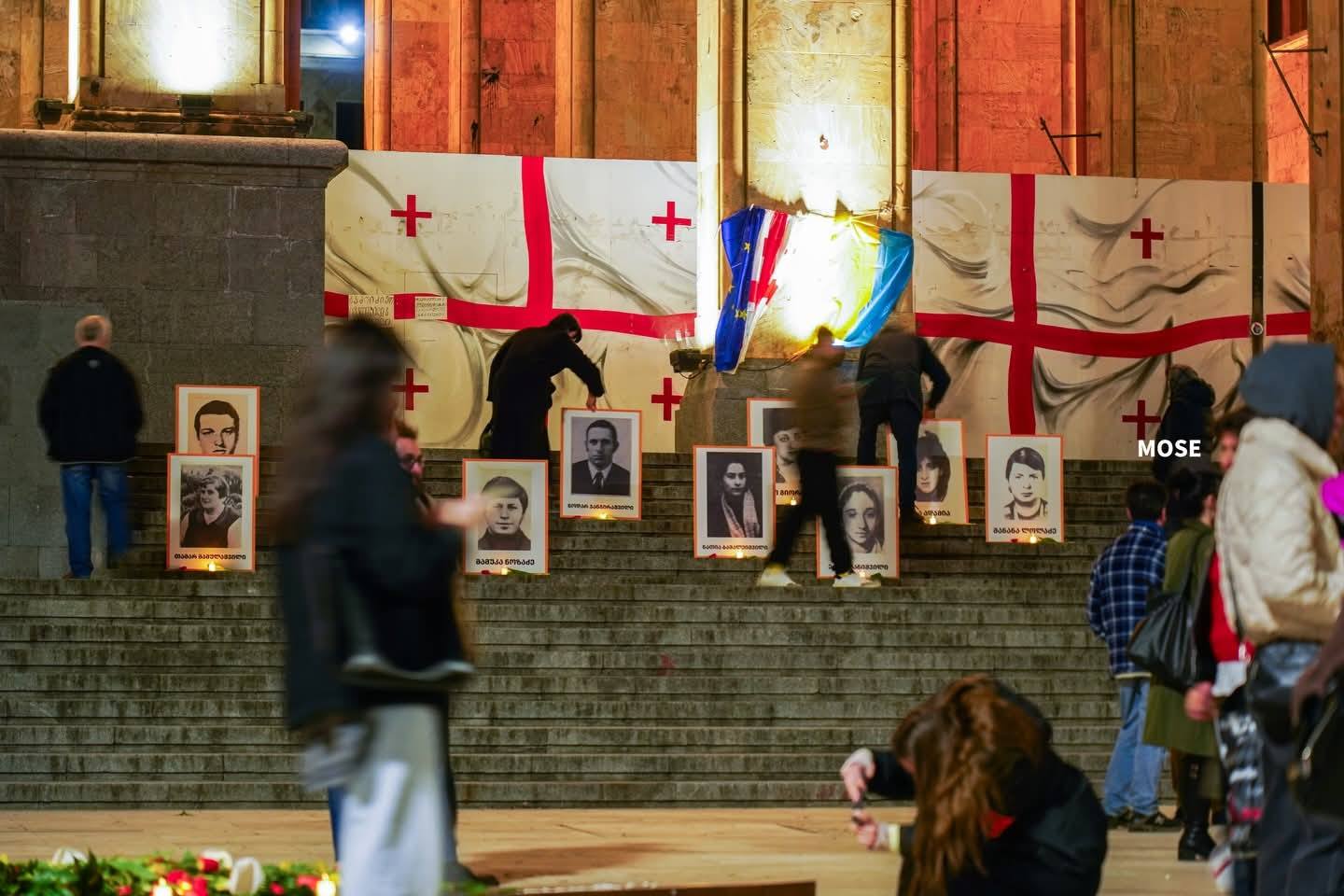
Со дня трагедии 9 апреля в Тбилиси прошло 37 лет.
В этот день в 1989 году на рассвете, в центре столицы войска и спецназ МВД СССР разогнали мирную демонстрацию за независимость. Погиб 21 человек, сотни получили отравление неизвестным газом.
В Грузии 9 апреля отмечают как День национального единства, гражданского согласия и памяти погибших за родину. В то же время это день восстановления независимости страны – официальный выходной.
Став символом жертвы ради свободы, дата в общественном сознании воспринимается как момент национального пробуждения, который привел к окончательному разрыву с советским прошлым.
По традиции, жители Тбилиси приходят к мемориалу у парламента на проспекте Руставели – цветы и свечи появляются там еще накануне вечером.
Однако второй год подряд 9 апреля не объединяет, а подчеркивает глубину политического кризиса в стране.
В среду территорию у парламента заняли родственники осужденных участников проевропейских протестов и оппозиционные активисты. Они намерены оставаться там в течение суток и не допустить к мемориалу представителей правящей партии «Грузинская мечта».
Собравшиеся считают, что власть «предала идеалы» погибших 37 лет назад, свернув с прозападного курса и усиливая связи с Москвой.
«Сегодня ситуация в стране такова, что ею управляет российский режим. Соответственно, там, где пролилась кровь грузин от рук русских, и где представители власти даже не осмеливаются это произнести, у них нет морального права приходить и возлагать цветы к мемориалу», – заявил Зураб Цецхладзе, отец студента Звиада Цецхладзе, осужденного на 2,5 года тюрьмы за организацию беспорядков на протестах в конце 2024 года в Тбилиси.
В прошлом году протестующие также организовали караул у мемориала. Тогда у парламента собрались сотни человек, и члены правительства отказались от возложения цветов. Впервые за много лет лидеры «Грузинской мечты» ограничились посещением молебна в храме Самеба.
Тех представителей власти и сторонников партии, кто все же пришел на Руставели, встретили враждебно.
37 years have passed since the April 9 tragedy in Tbilisi.
On this day in 1989, at dawn, in the center of the capital, Soviet troops and special forces of the USSR Ministry of Internal Affairs dispersed a peaceful demonstration for independence. 21 people died, hundreds were poisoned by an unknown gas.
In Georgia, April 9 is celebrated as the Day of National Unity, Civil Accord and Memory of those who died for the homeland. At the same time, it is the day of restoration of the country's independence — an official holiday.
Having become a symbol of sacrifice for freedom, the date is perceived in public consciousness as a moment of national awakening that led to the final break with the Soviet past.
By tradition, residents of Tbilisi come to the memorial near the parliament on Rustaveli Avenue — flowers and candles appear there already the evening before.
However, for the second year in a row, April 9 does not unite, but rather underscores the depth of the political crisis in the country.
On Wednesday, the territory near the parliament was occupied by relatives of convicted participants in pro-European protests and opposition activists. They intend to remain there for 24 hours and not allow representatives of the ruling party "Georgian Dream" to approach the memorial.
Those gathered believe that the authorities "betrayed the ideals" of those who died 37 years ago by turning away from the pro-Western course and strengthening ties with Moscow.
"Today the situation in the country is such that it is governed by the Russian regime. Accordingly, where Georgian blood was spilled at the hands of Russians, and where government representatives do not even dare to say this, they have no moral right to come and lay flowers at the memorial," stated Zurab Tsetskhladze, father of student Zviad Tsetskhladze, sentenced to 2.5 years in prison for organizing disturbances at protests in late 2024 in Tbilisi.
Last year, protesters also organized a vigil at the memorial. Then hundreds of people gathered at the parliament, and government members refused to lay flowers. For the first time in many years, the leaders of "Georgian Dream" limited themselves to attending a prayer service at the Sameba Cathedral.
Those representatives of the authorities and party supporters who nevertheless came to Rustaveli were met with hostility.