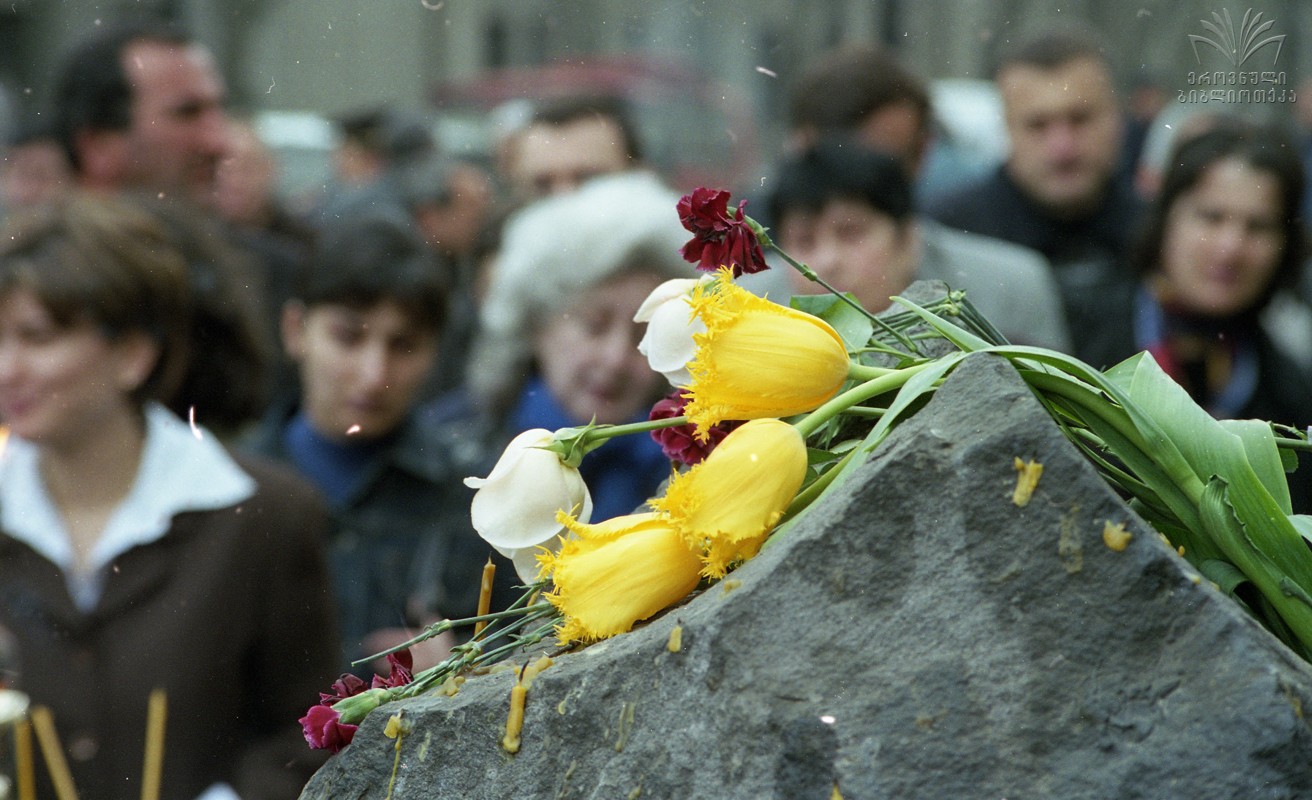
Сегодня Грузия отмечает две важнейшие даты своей современной истории.
9 апреля 1989 года советская армия с применением танков и токсичного газа жестоко разогнала массовую мирную демонстрацию за независимость Грузии в Тбилиси. 21 человек погиб на проспекте Руставели. Сотни людей получили отравления, ранения и травмы.
Два года спустя, 9 апреля 1991 года, чрезвычайная сессия Верховного Совета приняла акт о восстановлении независимости Грузии. В этот же день была восстановлена независимость, утраченная после советизации Грузии в 1921 году.
Ночь 9 апреля 1989 года
В ночь на 9 апреля в 3:56 на проспекте Руставели появился ОМОН. Перед зданием парламента собрались тысячи участников демонстрации. Им стало известно, что подразделениям советской армии отдан приказ разогнать демонстрацию.
Стремясь предотвратить кровопролитие, Католикос-Патриарх Грузии Илия II за несколько минут до разгона призвал людей войти в храм и помолиться. Однако протестующие не двинулись с места.
На рассвете на проспекте Руставели слышались звуки танцев и пения, которые позже сменились гробовой тишиной – участники ожидали разгона. Вскоре после обращения Патриарха вооруженные силы начали приближаться к зданию парламента.
Today, Georgia marks two of the most important dates in its modern history.
On April 9, 1989, the Soviet army used tanks and toxic gas to violently disperse a massive peaceful demonstration for Georgia's independence in Tbilisi. 21 people died on Rustaveli Avenue. Hundreds were poisoned and suffered injuries and trauma.
Two years later, on April 9, 1991, an extraordinary session of the Supreme Soviet adopted an act on the restoration of Georgia's independence. On the same day, independence was restored, which had been lost after the Sovietization of Georgia in 1921.
The night of 9 April 1989
On the night of 9 April, riot police appeared on Rustaveli at 3:56 am. Thousands of participants had gathered in front of the Parliament building. They had been informed that units of the Soviet army were ordered to disperse the demonstration.
In an effort to prevent bloodshed, the Catholicos-Patriarch of Georgia, Ilia II, asked the people several minutes before the raid to enter the temple and pray. The protesters, however, didn't move.
At dawn the sounds of dancing and singing could be heard on Rustaveli Avenue, which was later replaced by deathly silence – the participants were in anticipation of the raid. Shortly after the Patriarch's address, the armed forces started approaching the Parliament building.