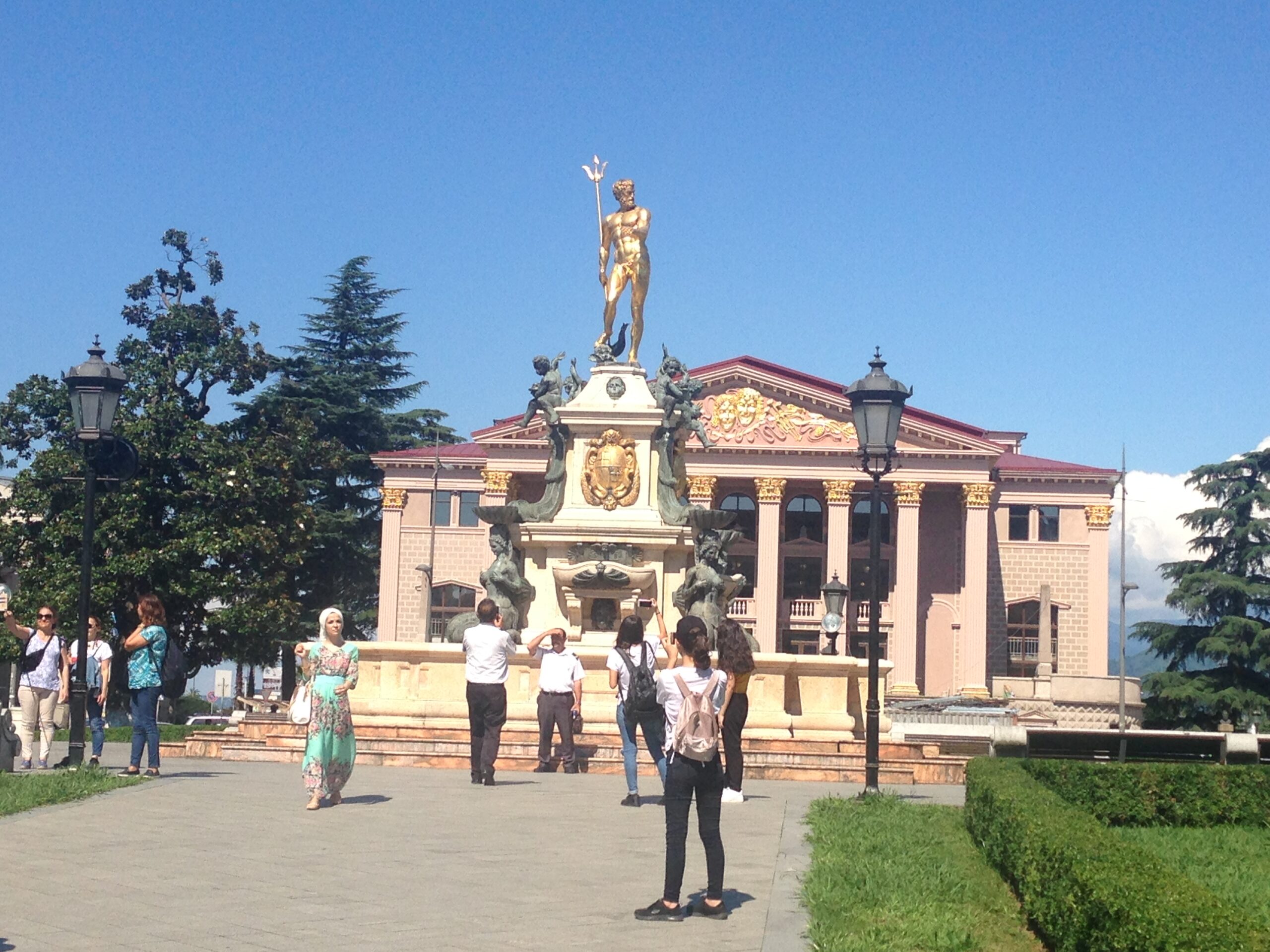
Площадь Европы — сердце Старого Батуми
Площадь Европы — одна из самых известных площадей Батуми и одно из центральных мест исторической части города. Она расположена в районе Старого Батуми и окружена зданиями, построенными в конце XIX и начале XX века. Сегодня площадь считается одной из самых красивых в городе. Здесь проходят концерты, фестивали и городские праздники, а туристы часто начинают прогулку по центру именно отсюда.
Архитектура площади заметно отличается от современной части Батуми. Здесь сохранились здания в европейском стиле с декоративными фасадами, башнями и балконами.
История площади
История площади начинается в период активного развития Батуми как крупного портового города. В конце XIX века город быстро рос благодаря торговле и строительству железной дороги. В этот период вокруг будущей площади начали появляться административные здания, гостиницы и дома купцов. Архитектура многих зданий была вдохновлена европейскими городами, что и определило внешний облик площади. Позже это место стало одним из центральных общественных пространств Батуми.
Статуя Медеи
Главным элементом площади является статуя Медеи, установленная на высокой колонне. Медея — персонаж древнегреческой мифологии, связанный с легендой о Золотом руне и древним царством Колхида, которое существовало на территории современной Грузии. В руках Медея держит золотое руно — символ богатства и древней истории региона. Эта скульптура стала одной из узнаваемых достопримечательностей Батуми.
Архитектура вокруг площади
Здания вокруг площади построены в разных европейских стилях — от неоклассицизма до модерна. Некоторые из них были реконструированы и сегодня используются как гостиницы, офисы и рестораны. Благодаря архитектуре и пешеходной зоне площадь остаётся одним из самых атмосферных мест в центре Батуми.
Площадь Европы сегодня
Сегодня площадь Европы — это популярное место встреч и прогулок. Днём здесь гуляют туристы и жители города, а вечером площадь оживает благодаря концертам и уличным выступл
Europe Square — the Heart of Old Batumi
Europe Square is one of the most famous squares in Batumi and one of the central places in the historic part of the city. It is located in the Old Batumi district and is surrounded by buildings constructed in the late 19th and early 20th centuries. Today, the square is considered one of the most beautiful in the city. Concerts, festivals, and city celebrations are held here, and tourists often begin their walk through the center from this very spot.
The architecture of the square is noticeably different from the modern part of Batumi. Here, buildings in European style with decorative facades, towers, and balconies have been preserved.
History of the Square
The history of the square begins during the period of active development of Batumi as a major port city. In the late 19th century, the city grew rapidly thanks to trade and railway construction. During this period, administrative buildings, hotels, and merchant houses began to appear around the future square. The architecture of many buildings was inspired by European cities, which determined the square's external appearance. Later, this place became one of Batumi's central public spaces.
The Statue of Medea
The main element of the square is the statue of Medea, installed on a high column. Medea is a character from ancient Greek mythology, associated with the legend of the Golden Fleece and the ancient kingdom of Colchis, which existed on the territory of modern Georgia. In her hands, Medea holds the golden fleece — a symbol of wealth and the ancient history of the region. This sculpture has become one of Batumi's recognizable landmarks.
Architecture Around the Square
The buildings around the square are constructed in various European styles — from neoclassicism to Art Nouveau. Some of them have been reconstructed and are now used as hotels, offices, and restaurants. Thanks to its architecture and pedestrian zone, the square remains one of the most atmospheric places in central Batumi.
Europe Square Today
Today, Europe Square is a popular meeting and walking place. During the day, tourists and city residents stroll here, and in the evening the square comes alive thanks to concerts and street performances.