Все фотографии Кита Юена – kityuen.co.uk Первое, что бросается в глаза в Дано, так это то, что оно выглядит как портал в далекое прошлое. Эта дикая и необузданная деревня, изолированная высокими горами Тушетии в северо-восточной провинции Грузии, кажется забыта всеми, кроме Бога. Вас можно простить за то, что вы решили, что попали в феодальную эпоху, если бы не солнечные панели, прислоненные к древним каменным стенам.
Следующее, что вы замечаете, - это глаза, которые примирились с одиночеством, известным только высоко в горах. Гордые лица людей состарились вместе с их каменными развалинами. Их руки грубы от выпаса овец и замковых заборов, а голоса хриплы от курения, криков и громкого пения во время супра – пиршества, где любовь и гнев чередуются или происходят одновременно.
И вот я сижу на одной из этих супра, переполненный эмоциями лондонец с Google Translate и думаю, что нахожусь в большем бедственном положении: от того, что проглотил восьмую рюмку чачи, или от того, что «случайно» пролил её.
Конец сентября, и в конце стола, освещенного только гудящей налобной лампой, я наблюдаю за Байрамом, старейшиной пиршества и самым опытным пастухом. Каждый его смех вызывает равные количествами радости и боли - он сломал ребро накануне. Я спросил его, сможет ли он всё ещё проводить стадо вниз по горе к своим зимним пастбищам в Алвани, ниже Кахетии. Получив опыт в прошлом весной по пути из Алвани в Дано, я предложил в этот раз идти впереди.
«Собака не умирает от хромоты», - ответил мне Байрам с хмурым выражением. Это фраза, которую я часто слышал от него раньше.
***
Левани «Байрам» Татаорадзе легко узнать издалека по его медленно, сутуло-хромающей походке, когда он трудится на ландшафте. Иногда он закутан в набады – овечье полупальто, которое пастухи носят с древности. Его изможденное лицо, на котором виден далекий, задумчивый взгляд, полно контуров и седых волос. Он получил свое прозвище – «Байрам» - от мусульманского праздника, однако он вовсе не весел. Этот пастух более упрям, чем его козы, которых мы гнали по всему Кахетии прошлой весной, пока наши голоса и ноги не сдавались.
Но под его упрямством и усталостью скрывается нежный, добрый, глубоко религиозный человек, который добросовестно ведет свое стадо к лучшим пастбищам. «Добрый пастырь», чью сложную натуру я полон решимости понять, несмотря на языковой барьер.
Рожденный в 1965 году, Байрам вырос в седлах осла. «Наши ноги онемели, мы плакали», - смеется он. Байрам не был stranger к трудностям и неудобствам. Тогда не было дорог в Тушетию, а ежегодная миграция овец между зимними и весенними пастбищами составляла 200 километров пути пешком с припасами, молодыми ягнятами и детьми, прикрепленными к ослам и лошадям.
Выросший в семье пастухов, которые передавали профессию на протяжении пяти и более поколений, он уже принимал участие в трансферте.
Reviews Review | My Happy Family — what passes for women’s joy in Georgia
by Tamar Agatha Kapanadze
(Updated: about 14 hours ago)★★★★☆
My Happy Family is a portrait of a middle-aged Georgian woman who dares to get a room — and a life — of her own.
Nana Ekvtimishvili and Simon Groß’s My Happy Family (2017) gives the viewer the opportunity to observe the everyday life of an ordinary woman living her ordinary life. There is no drama, plot twists, or big revelations — just a quiet exploration of self and family dynamics in a patriarchal society where womanhood comes with a lot of expectations and dispositions.
For the Western audience, some things can be quite alien, while for Georgians, every detail seems familiar. But at the end of the film, everyone will find something to relate to, reflect on, and think about.
Manana (Ia Shugliashvili) is a 52-year-old literature teacher living with her husband, her adult children, her son-in-law, and her elderly parents in a Tbilisi apartment — crowded not only physically but atmospherically, dense with obligation and the low-grade friction of people who have long since exhausted their patience with one another. On the surface, nothing is catastrophically wrong. Her husband Soso (Merab Ninidze) is not violent, nor a drunk. As one elderly relative offers in what is genuinely intended as consolation: ‘He doesn’t beat you’. This is what passes for a happy family.
Early in the film, Manana comes home from work and cuts herself a slice of cake. Her mother immediately scolds her for eating before dinner. It is a tiny moment, but it is also the whole film.
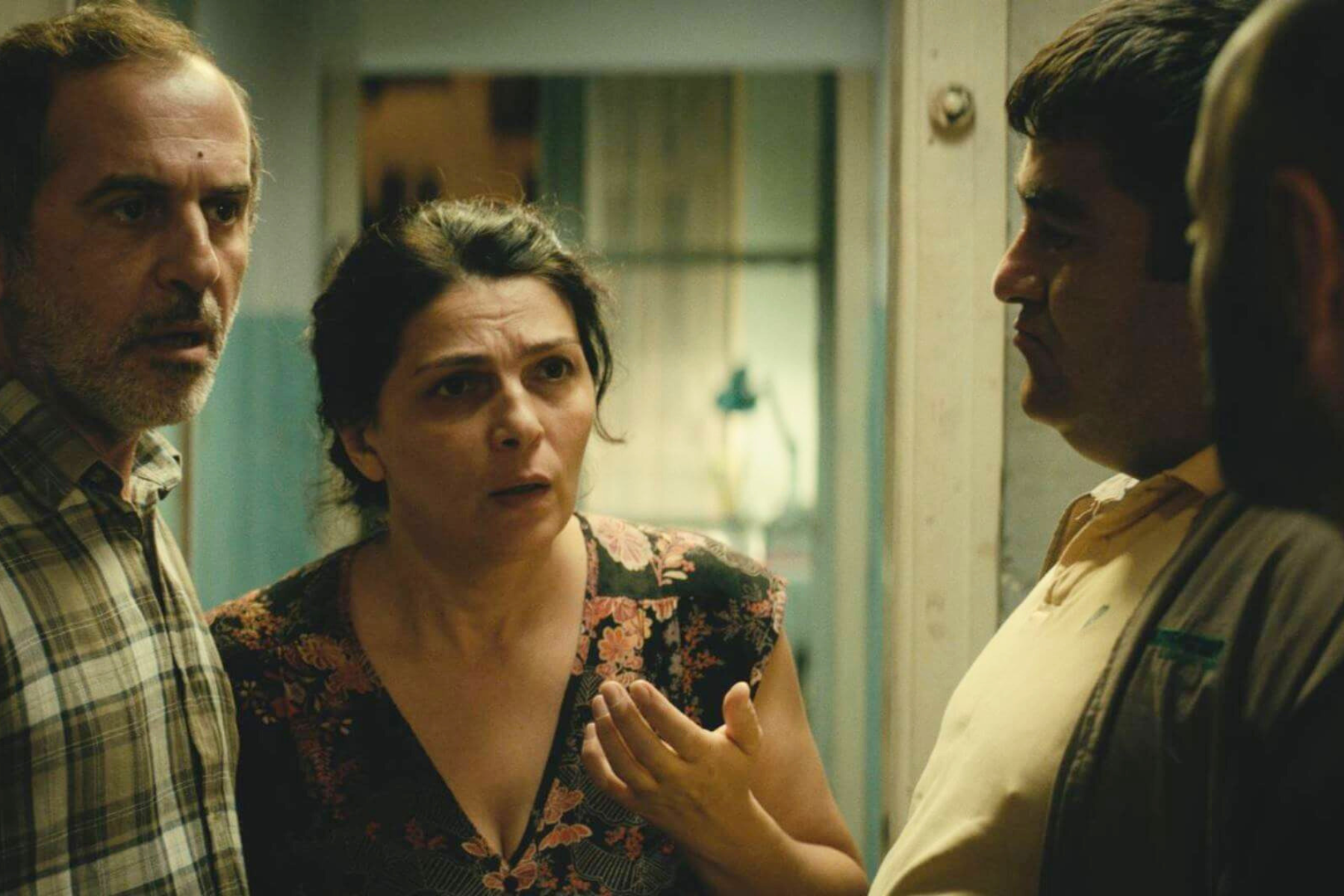
One day, Manana announces she has found a small apartment in another district and will be moving out. The earthquake that follows this seemingly unprompted decision registers differently for everyone around her. To her mother, it is a disgrace. To her brother — called in for reinforcement — an insult to the family's reputation. To her husband, a wound he cannot locate or name. No one can find a reason sufficient enough to justify her decision, because Manana’s world has no concept of a person simply needing space to be herself.
It is impossible to watch My Happy Family without thinking of Lana Ghoghoberidze’s 1978 film Some Interviews on Personal Matters. Nearly 40 years separate the two films — the Soviet Union has fallen, Georgia has gained independence, Tbilisi has changed beyond recognition. And yet, the architecture of expectation inside which both women live is remarkably, stubbornly intact.
In Manana’s newly rented apartment, the camera lingers on space, light, and silence in something close to relief — the same way it lingers in the family home with something close to suffocation. Slowly, Manana begins reconnecting with herself and with her family, but on her own terms, and finds her voice again — literally.
She retrieves her guitar, which has been gathering dust for years, and begins to sing. These scenes are among the most tender in the film, made more so by the fact that Shugliashvili is performing songs by her real-life mother, the celebrated Georgian singer Inola Gurgulia, who died when Shugliashvili was only 10. It transforms what could have been a simple metaphor for reclaimed selfhood into something more personal.
There are other small moments that carry just as much weight. Manana's brother asks her new neighbours — people he knows somehow, because that is how Tbilisi operates — to keep an eye on her. The city’s social fabric, its intimacy and its surveillance, extends even into her escape. In another scene, she meets a former classmate who is now the sole earner for her entire family, like many Georgian women.
The film is not without weaknesses. Some family arguments repeat themselves without quite building to the pressure they intend, and certain storylines feel like detours rather than depths. But these are minor frustrations in an otherwise carefully observed film.
My Happy Family is a rare piece: one that treats a middle-aged Georgian woman’s interiority as the only subject worth its full attention. It does not ask us to find Manana sympathetic, it asks us to find her real. At the end of her Virginia Woolf-esque journey, Manana does not transform or triumph. She simply persists — in her small apartment, with her tomatoes, her music, and her cake.
Film details: My Happy Family (2017), directed by Nana Ekvtimishvili and Simon Groß, is available to watch on Netflix and Kanopy.
Reviews
Georgia
Women’s Rights
Culture
In Focus
Cinema
Tamar Agatha Kapanadze • Follow
20 articles•0 Followers
Tamar Agatha is a human rights defender and civic activist from Tbilisi. Her main interests are women’s and LGBTQ+ rights. When not working on advocacy and justice, she can be found leading walking tours through Tbilisi’s winding streets, reading obsessively, or catching the latest performance at the theatre.