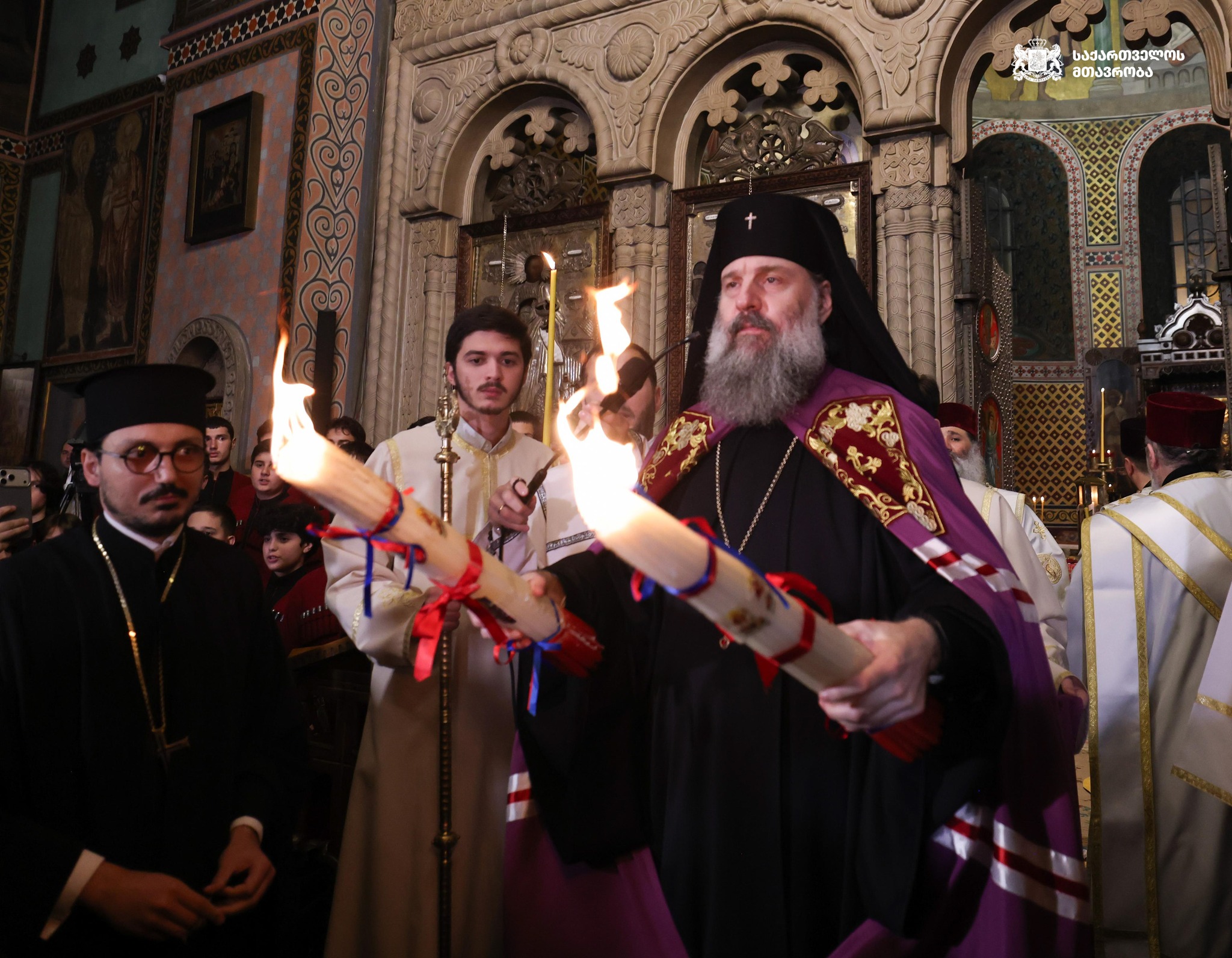
Впервые за почти полвека пасхальное послание Грузинской православной церкви зачитал не Католикос-Патриарх Илия II, а местоблюститель патриаршего престола митрополит Сенакский и Чхороцкуйский Шио (Муджири). Эпистола, оглашенная в канун Воскресения Христова в кафедральном соборе Самеба в Тбилиси, вышла за рамки традиционного поздравления и прозвучала как программный текст в переломный для Церкви момент.
«ქრისტე აღდგა!» («Христос Воскрес!») – начал послание митрополит Шио. За привычной пасхальной формулой стоит глубокий контекст: впервые Грузия встречает Пасху без Илии II – фигуры, которая 49 лет определяла не только церковную, но и общественную жизнь страны.
Шио говорит о «сиротстве» паствы после кончины патриарха, но сразу переводит эту эмоцию в богословскую плоскость. Смерть, по его словам, – не конец, а переход. Победа Христа над смертью дает утешение и надежду:
«Для нас, христиан, смерть – это не погибель, а путь, ведущий к спасению и вечному блаженству. Именно в этом смысл пасхальной радости, основа надежды каждого человека».
Центральное место в послании занимает образ почившего патриарха. Шио сравнивает его служение с миссией пророка Моисея, который «по тонкому мосту» вел народ через испытания.
Патриарший местоблюститель так формулирует основные достижения Илии II:
«Даже после смерти Святейший Патриарх как будто продолжает обращать, объединять и проповедовать народу. Смело можно сказать, что Католикос-Патриарх Илия II, следуя по стопам своих предшественников и совершая богоугодные дела, вдохнул новую жизнь в Грузинскую православную церковь. Его учения и заслуги продолжают жить в каждом верующем, чьи сердца, обращенные к Богу, единодушно прославляют Воскресшего Спасителя.»
Послание выдержано в строго церковной риторике, но содержит ясный подтекст. В условиях, когда Священный синод в ближайшее время должен определить кандидатов в патриархи и избрать нового предстоятеля, акцент на единстве, взаимоподдержке, молитве и любви звучит как призыв избежать раскола.
For the first time in almost half a century, the Easter message of the Georgian Orthodox Church was read not by Catholicos-Patriarch Ilia II, but by the locum tenens of the patriarchal throne, Metropolitan Shio (Mudjiri) of Senaki and Chkhorotsku. The epistle, proclaimed on the eve of Christ's Resurrection at the Sameba Cathedral in Tbilisi, went beyond a traditional greeting and sounded as a programmatic text at a pivotal moment for the Church.
"Christ is Risen!" — Metropolitan Shio began the message. Behind the familiar Easter formula lies a deep context: for the first time, Georgia is celebrating Easter without Ilia II — a figure who for 49 years defined not only church life but also the public life of the country.
Shio speaks of the "orphanhood" of the flock after the patriarch's passing, but immediately translates this emotion into a theological dimension. Death, according to him, is not the end, but a transition. Christ's victory over death provides comfort and hope:
"For us Christians, death is not destruction, but a path leading to salvation and eternal bliss. This is the meaning of Easter joy, the foundation of every person's hope."
The central place in the message is occupied by the image of the late patriarch. Shio compares his service to the mission of the prophet Moses, who led his people "across a narrow bridge" through trials.
The patriarchal locum tenens formulates Ilia II's main achievements as follows:
"Even after death, His Holiness the Patriarch seems to continue to address, unite and preach to the people. It can be boldly said that Catholicos-Patriarch Ilia II, following in the footsteps of his predecessors and performing God-pleasing deeds, breathed new life into the Georgian Orthodox Church. His teachings and merits continue to live in every believer whose hearts, turned to God, unanimously glorify the Risen Savior."
The message is sustained in strictly ecclesiastical rhetoric, but contains a clear subtext. In conditions when the Holy Synod must soon determine candidates for patriarch and elect a new primate, the emphasis on unity, mutual support, prayer and love sounds like a call to avoid schism.